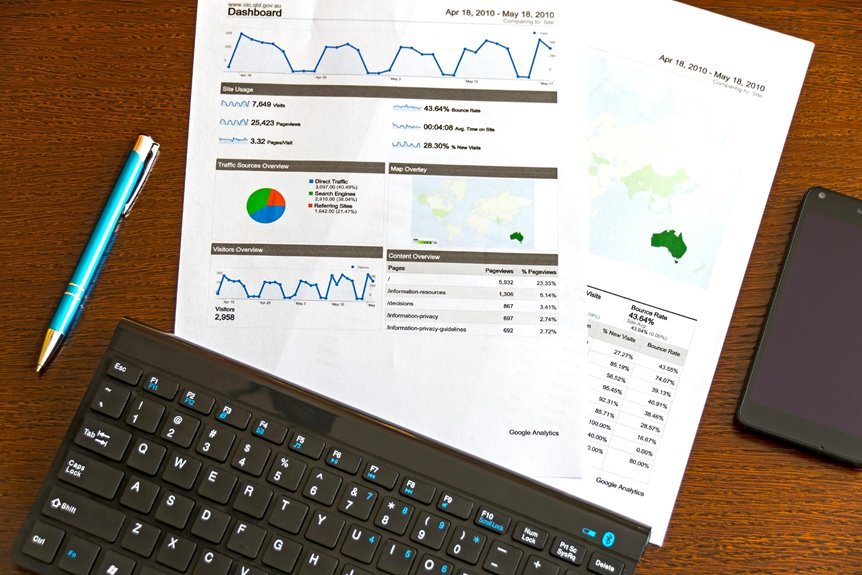
Business Growth Dashboard: 8882391044, 727884654, 944341751, 3612887311, 2392681700, 280239800

The implementation of a Business Growth Dashboard is crucial for organizations aiming to enhance their performance metrics. By monitoring key indicators such as customer acquisition costs and revenue forecasts, businesses can identify trends and optimize their strategies accordingly. However, the effectiveness of these dashboards hinges on their design and usability. Understanding how to leverage this tool can significantly impact decision-making processes. What specific metrics should be prioritized for maximum effectiveness?
The Significance of a Business Growth Dashboard
While many businesses recognize the importance of tracking performance metrics, the implementation of a Business Growth Dashboard serves as a critical tool for translating data into actionable insights.
This dashboard visualization enables organizations to monitor key performance indicators effectively, facilitating informed decision-making.
Key Metrics to Monitor for Business Success
Identifying key metrics is essential for any organization aiming for sustained business success.
Critical indicators include customer acquisition costs, which reveal the efficiency of marketing efforts, and revenue forecasting, which enables proactive financial planning.
Monitoring these metrics allows businesses to adapt strategies, optimize resources, and ensure alignment with market demands, ultimately fostering a culture of growth and innovation that resonates with a desire for autonomy.
Analyzing Trends and Making Data-Driven Decisions
As companies increasingly rely on data to inform their strategies, analyzing trends has become a critical process for making informed decisions.
Effective data visualization techniques enhance trend analysis, enabling stakeholders to identify patterns and anomalies swiftly.
Implementing a Business Growth Dashboard for Strategic Planning
A well-implemented business growth dashboard serves as a pivotal tool for organizations aiming to enhance their strategic planning efforts.
Effective dashboard design integrates critical performance indicators, enabling stakeholders to monitor progress and adjust strategies in real time.
Conclusion
In conclusion, the implementation of a Business Growth Dashboard serves as a pivotal tool for organizations striving for success. Interestingly, as businesses increasingly rely on data-driven strategies, a recent study revealed that companies utilizing such dashboards experienced a 25% growth in revenue within a year. This correlation highlights the dashboard’s capacity to transform raw data into actionable insights, ultimately enabling organizations to navigate market changes effectively and foster a culture of innovation that propels sustained growth.